AOBiome Therapeutics – Pioneering a Revolutionary Remedy for Skin Inflammatory Disorders
Press Releases
AOBiome Therapeutics – Pioneering a Revolutionary Remedy for Skin Inflammatory Disorders
AOBiome Therapeutics – Transforming Human Health via Novel Microbiome-Based Therapies for Inflammatory Conditions
https://thesiliconreview.com/magazine/profile/aobiome-therapeutics-transforming-human-health/
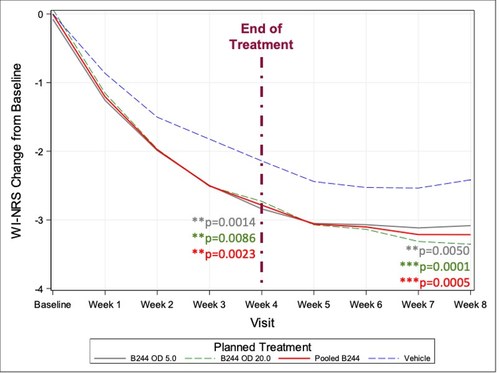
CAMBRIDGE, Mass., Sept. 20, 2022 /PRNewswire/ — AOBiome Therapeutics, Inc. (“AOBiome”), a leading clinical-stage microbiome company focusing on inflammatory conditions, recently completed a Phase 2b study of 547 patients with moderate-to-severe itch and mild-to-moderate atopic dermatitis. The trial results showed continued durability of treatment effect and separation from placebo post-trial of 40.9% reduction in itch from baseline at 8 weeks, 4 weeks after the last dose.
Further investigation supported previous findings on the secondary effects of inert Ammonia Oxidizing Bacteria (AOB), even after it no longer converts ammonia to Nitric Oxide and Nitrite. A recently-published in vitro study has demonstrated that both live and metabolically inactive AOB can downregulate Th2-associated pruritic cytokines. For more details see: https://www.nature.com/articles/s41598-021-93299-1.
The company ran a separate open label 30 subject cosmetic safety study utilizing a cosmetic strength of metabolically inactive (heat-killed) AOB in subjects with itch associated with mild-to-moderate atopic dermatitis. The results of this study bolster the assessment of AOB as it relates to both safety and the positive results seen in the company’s 547 patient Phase 2b study with live B244 material and the trailing effect, once that study was completed.
Key results from the separate Cosmetic study:
“These results show that AOB can still have real-world impact on the immune system even when AOB is neither consuming ammonia or no longer viable. This has huge implications for AOB’s persistence on the skin, the effectiveness of our clinical products and the simplicity of incorporating AOB into patient’s everyday routines.” says President & CEO, Todd Krueger.
AOBiome is in the process of planning Phase 3 studies for B244, for which it aims to start recruiting patients in 2023.
AOBiome’s B244 platform is a patented, proprietary, topical formulation. Once deployed, B244 produces nitric oxide, a signaling molecule known to regulate inflammation and vasodilation. B244 has been observed to be well-tolerated in clinical studies to date.
Additionally, recently published immunology data demonstrates that B244 can reduce the inflammatory and pruritic cytokines IL-4, IL-5, IL-13, and IL-31. See full article at: https://www.nature.com/articles/s41598-021-93299-1.
AOBiome Therapeutics, Inc. is a Cambridge, MA-based life sciences company focused on transforming human health by developing topical therapeutics for inflammatory conditions. AOBiome is advancing a pipeline of multiple, clinical-stage therapeutic candidates. Learn more at www.aobiome.com.
Contacts:
For Media Inquiries:
Jim Hoffman
845-417-3487
Press@AOBiome.com
SOURCE AOBiome
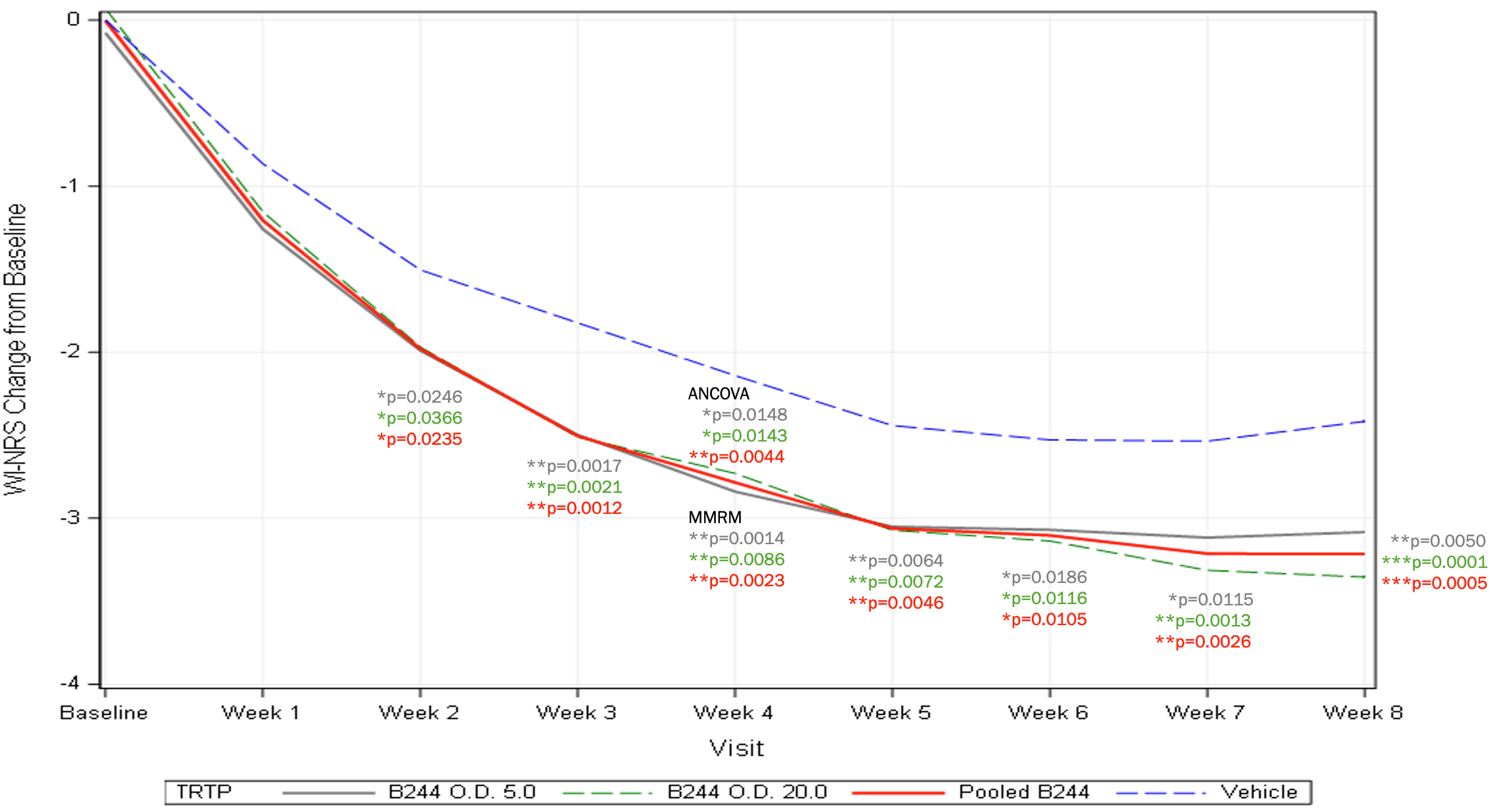
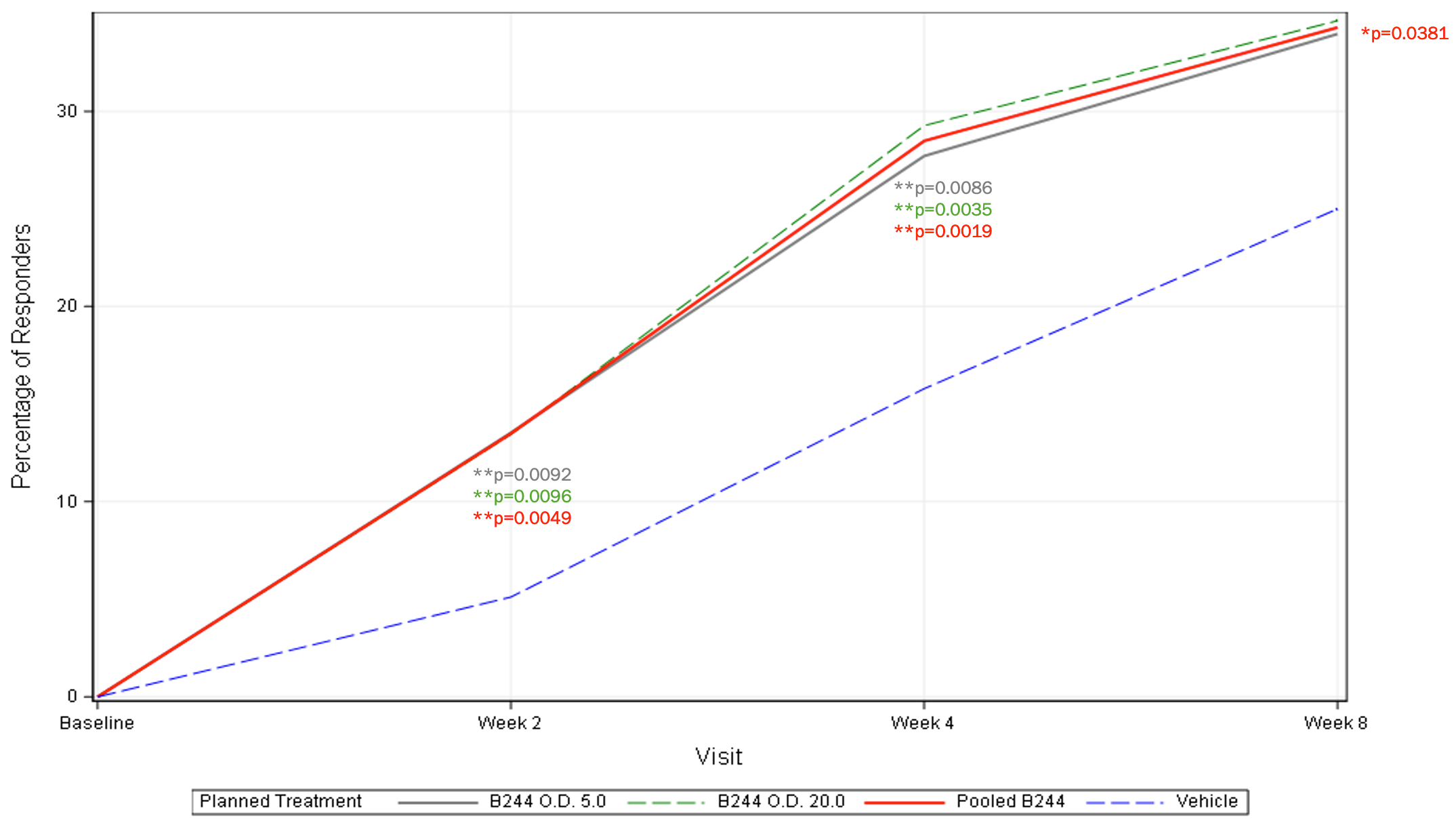
CAMBRIDGE, Mass., February 22, 2022 /PRNewswire/ – AOBiome Therapeutics, a clinical stage biotechnology company focused on transforming human health by developing topical biologic therapies for systemic inflammatory conditions, announced positive pivotal Phase 2b results from its trial evaluating B244 in both pruritus (itch) and appearance of atopic dermatitis (eczema). The trial enrolled 547 patients with mild-to-moderate appearance of atopic dermatitis and moderate-to-severe itch. The trial met all primary and secondary endpoints, showing that B244 significantly reduced itch, reduced overall disease severity, improved skin clearance, and improved health-related quality of life measures at 4 weeks compared to placebo.
“The favorable profile demonstrated in this study for safety and efficacy on both skin lesions and itch fills important unmet needs for first line therapies in atopic dermatitis. Current therapies often do not work or come with significant side effect risks. The efficacy observed for this topical spray after only 4 weeks is exciting for both clinicians and patients. An effective non-steroidal, non-injectable therapy without black box warnings or laboratory monitoring is pretty much the holy grail of unmet need in dermatology” said Dr. Jonathan Silverberg, Associate Professor of Dermatology, George Washington School of Medicine and Health Services.
Mean Change in WI-NRS (mITT) – 4 Week Treatment
EASI 75% Improvement (mITT) – 4 Week Treatment
“Topical biotherapeutic drug development is challenging, as traditional factors like PK/PD and animal models are not informative. We were able to isolate the immunomodulation of B244 across Il-4, 5, 13 and 31 and then select a dose and design a delivery regimen that highlighted the benefits of B244, while minimizing the high placebo rate that often plagues these types of studies. We are excited about moving toward a Phase 3 trial” said Todd Krueger, AOBiome’s President and CEO.
About the Phase 2b Clinical Trial
This trial was a double blind, randomized, placebo controlled, multicenter, Phase 2b dose selection study to evaluate the efficacy, safety, and tolerability of B244 live biotherapeutic topical spray twice daily for 28 days for the treatment of pruritus associated with atopic dermatitis in 547 adults with a history of mild-to-moderate atopic dermatitis (eczema) and moderate to severe pruritus (itch). The study was conducted at 56 U.S. sites across 25 states. The primary endpoint for the study was mean change in WI-NRS from baseline to week four. Secondary endpoints includedproportion of subjects with ≥4 point improvement in WI-NRS from baseline to week four. The itch WI-NRS scale is a validated, self-reported instrument for measurement of itch intensity. Additionally, endpoints of Investigator Global Assessment (IGA) and Eczema Area and Severity Index (EASI) for Atopic Dermatitis were captured.
Additional information regarding this and AOBiome’s other clinical programs may be found at www.clinicaltrials.gov.
About Atopic Dermatitis
In the United States, 7% of adults and 12% of children under the age of 18 years suffer from eczema and associated pruritus.1 Of these, approximately two thirds have mild to moderate cases. Patients with mild to moderate atopic dermatitis can exhibit moderate to severe pruritus which is inadequately addressed by available therapies. There is a significant unmet need to adequately treat this patient population with a safe and effective alternative to existing therapies.
About B244
AOBiome’s B244 platform is a patented, proprietary, topical and intranasal formulation. Once deployed, B244 produces nitric oxide, a signaling molecule known to regulate inflammation and vasodilation. B244 has been observed to be well-tolerated in clinical studies to date.
Additionally, recently published immunology data demonstrates that B244 can reduce the inflammatory and pruritic cytokines IL-4, IL-5, IL-13, and IL-31. See full article at: https://www.nature.com/articles/s41598-021-93299-1.
About AOBiome Therapeutics, Inc.
AOBiome Therapeutics, Inc. is a Cambridge, MA-based life sciences company focused on transforming human health by developing topical biologic therapies for dermatological, ocular, nasal, and systemic inflammatory conditions. Learn more at www.aobiome.com.
Contacts:
For Media Inquiries:
Jim Hoffman
845-417-3487
Jim@AOBiome.com
1 Hanifin J, Reed M. A Population-Based Survey of Eczema Prevalence in the United States. Dermatitis. 2007;18(2):82-91. doi:10.2310/6620.2007.06034.
| SOURCE AOBiome Therapeutics, Inc. |
AOBiome’s 547 subject Phase 2b trial for Treatment of Pruritus (Itch) Associated with Atopic Dermatitis (Eczema) successfully completes its recruitment goal
CAMBRIDGE, Mass., November 16, 2021 /PRNewswire/ — AOBiome Therapeutics), a leading clinical-stage biotechnology company focusing on inflammation, announced completion of enrollment in its Phase 2b clinical trial in pruritus (itch) associated with atopic dermatitis. This trial is based on previous positive clinical trial results related to the investigation of its lead product candidate, B244, a live topical biotherapeutic, in patients with atopic dermatitis (eczema) in a 122 subject Phase 2a clinical trial in adults as well as a 28 subject Phase 1b clinical trial in pediatric patients with 28 patients. The company believes that its current 547 subject study is the largest Clinical Trial ever run using a live topical biotherapeutic by a wide margin.
Based on its Phase 2a and 1b efficacy signals, a double blind, randomized, placebo controlled, multicenter, Phase 2b dose selection study was initiated to evaluate the efficacy, safety, and tolerability of B244 live topical spray twice daily for 28 days for the treatment of pruritus in 547 adults with a history of mild-to-moderate atopic dermatitis. 56 sites across 25 states enrolled patients in this trial. The primary endpoint for the study was mean change in Worst Itch Numeric Rating Scale (WI-NRS) from baseline to week 4. Secondary endpoints included the proportion of subjects with ≥ 4 point improvement in WI-NRS from baseline to week 4. The Itch NRS is a validated, self-reported instrument for measurement of itch intensity. Additionally, endpoints of Investigator Global Assessment (IGA) and Eczema Area and Severity Index (EASI) for Atopic Dermatitis were captured. Due to COVID-19, patient and site staff safety have been of paramount concern. AOBiome has implemented a comprehensive risk mitigation plan to ensure such safety. The trial enrolled enough patients to hit its original completer target despite the pandemic. The company expects top line data by early February 2022.
“Itch remains the primary unmet medical need for patients with atopic dermatitis. Itch therapies tend to work slowly and B244’s rapid onset could prove very helpful to patients who need faster relief. Recent findings have shown that injectables are not as safe as originally hoped and now require black box warnings. A solution with this sort of safety profile positions B244 as a first-in-line therapy for itch which could be a big win for patients” said President & CEO, Todd Krueger. “We look forward to announcing results from this study early in 2022.”
In the United States, 7% of adults and 12% of children under the age of 18 years suffer from eczema and associated pruritus.1 Of these, approximately two thirds have mild to moderate cases. Patients with mild to moderate atopic dermatitis can exhibit moderate to severe pruritus which is inadequately addressed by available therapies.
“B244’s downregulation of multiple cytokines such as IL-4, 5, 13, and 31 supports real hope that there will be an effective solution to help stop the itch scratch cycle in both adult and younger populations” said Klaus Dugi, non-executive Director of AOBiome and Adjunct Professor of Medicine at Heidelberg University in Germany. “Current therapies for atopic dermatitis focus on appearance, while pruritus is the primary complaint patients would like to see resolved. B244’s innovative nature represents a potential novel therapeutic opportunity to safely address the medical needs of these patient populations.”
Additional information regarding this and AOBiome’s other clinical programs may be found at www.clinicaltrials.gov.
About B244
AOBiome’s B244 platform is a patented, proprietary, topical and intranasal formulation. Once deployed, B244 produces nitric oxide, a signaling molecule known to regulate inflammation and vasodilation. Additionally, recently published immunology data demonstrates that B244 can reduce the inflammatory and pruritic cytokines IL-4, IL-5, IL-13, and IL-31.
About AOBiome Therapeutics, Inc.
AOBiome Therapeutics, Inc. is a Cambridge, MA-based life sciences company focused on transforming human health by developing topical biologic therapies for local, nasal and systemic inflammatory conditions, as well as earlier-stage preclinical programs targeting diverse inflammatory indications. Learn more at www.aobiome.com.
Contacts:
For Media Inquiries:
Jim Hoffman
845-417-3487
Jim@AOBiome.com
1 Hanifin J, Reed M. A Population-Based Survey of Eczema Prevalence in the United States. Dermatitis. 2007;18(2):82-91. doi:10.2310/6620.2007.06034.
| SOURCE AOBiome Therapeutics, Inc. |
Newly completed study aimed to understand the safety and potential benefits of the AOB’s cellular structure without the production of nitric oxide and nitrite.
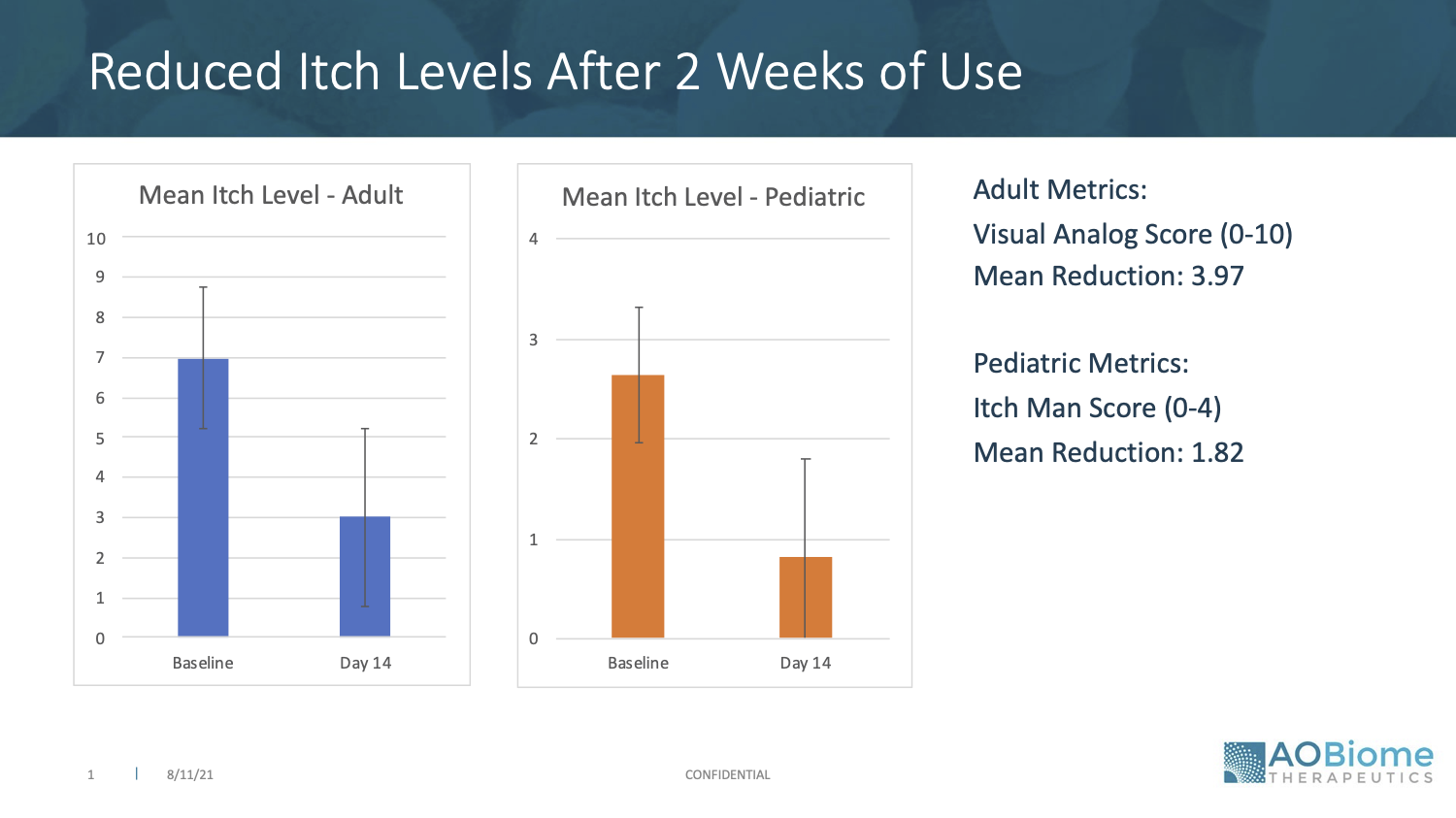
CAMBRIDGE, Mass., Aug. 17, 2021 /PRNewswire/ — AOBiome Therapeutics, Inc. (“AOBiome”), a leading clinical-stage microbiome company focusing on inflammatory conditions, has announced the completion of a cosmetic study investigating the safety and effects of its novel AOB formulation on subjects with mild to moderate eczema. A total of 30 subjects used a cream containing metabolically inactive AOB twice a day for 2 weeks. Continuing the historically strong safety profile of applied AOB, the cream formulation was well-tolerated by the subjects. Subjects reported dramatic increase in multiple quality of life metrics throughout and a significant reduction in itch. The results of the study demonstrate immediate and sustained reductions in itch with the application of a probiotic skin cream in subjects between 2 and 65 years of age.
The impetus for the new eczema study was to better understand AOBiome’s recently published data regarding the link between AOB in both a metabolically active and inactive state and the reduction of the itch-related cytokines IL-4 and IL-13. This study further bolsters the assessment of AOB as it relates to their current 576 patient Phase 2b pruritus study with live material. For more details see: https://www.nature.com/articles/s41598-021-93299-1
Key results from the Eczema study showed:
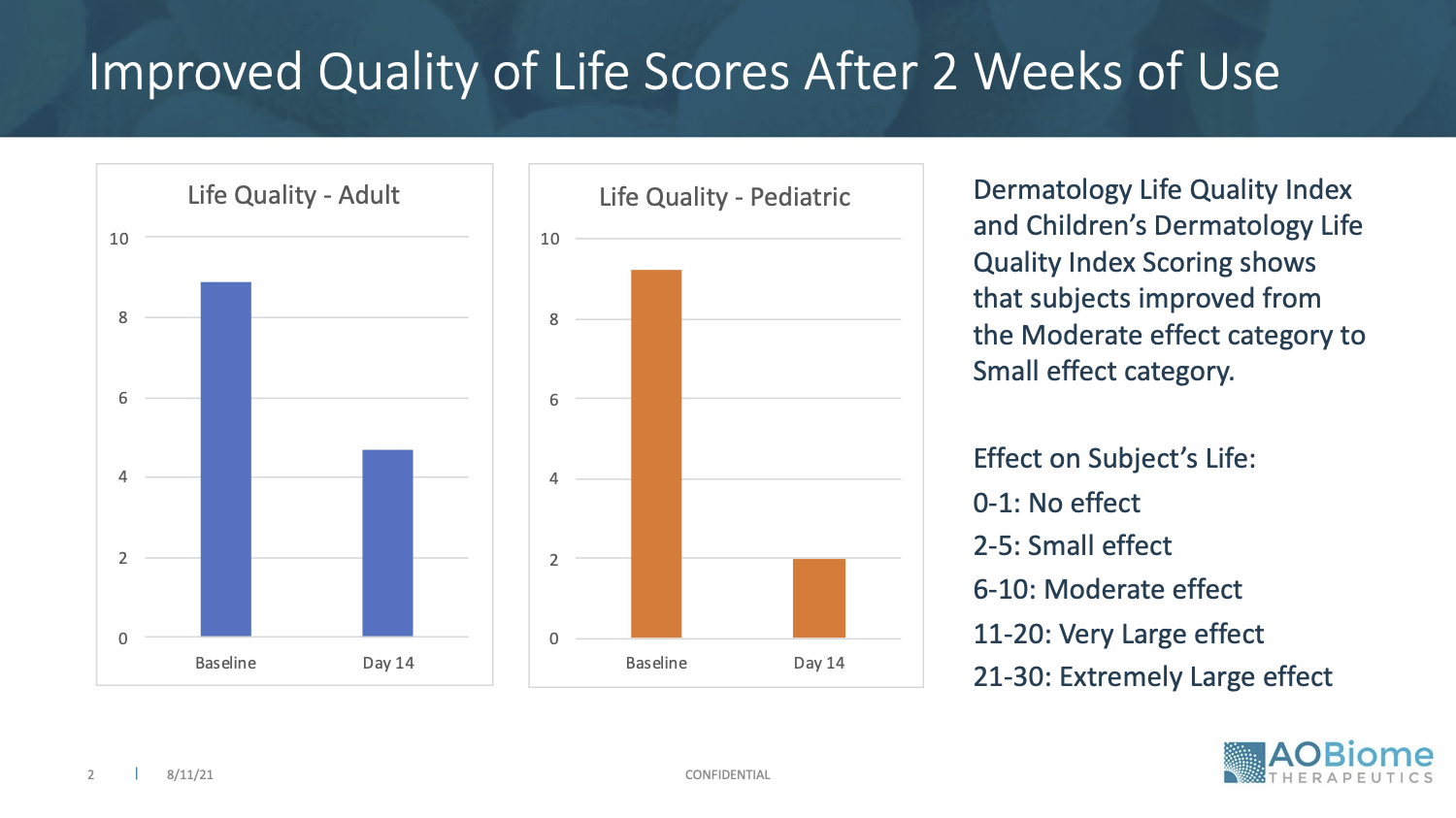
The alleviation of itch symptoms was shown to have a significant improvement in the quality of life of the adult and pediatric subjects, as demonstrated by the dermatology life quality index (DLQI) and Children’s Dermatology Life Quality Index (CDLQI) questionnaires. Both age groups showed an improvement in life quality at both Day 7 and Day 14, with their eczema improving to the point of only having a small effect on their daily life.
Chart 1: Reduced Itch Levels After 2 Weeks of Use
Link to Chart
Chart 2: Improved Quality of Life Scores After 2 Weeks of Use
Link to Chart
“These results show that AOB can still have a real world impact on the immune system when they are not consuming ammonia or no longer viable. This has huge implications for both the effectiveness of our clinical products and AOB persistence on the skin, as well as for the use of dead AOB as a beneficial ingredient in everyday consumer products,” says President & CEO, Todd Krueger.
“Eczema is a huge unmet clinical need, especially in children. It is exciting to see the possibility of treating symptoms of eczema, especially itch, with a shelf stable formulation of AOB. This further reinforces the promising data that AOBiome has been generating.” said Peter Lio, MD, FAAD, Clinical Assistant Professor of Dermatology & Pediatrics, Northwestern University Feinberg School of Medicine and founding director of the Chicago Integrative Eczema Center.
AOBiome is currently running, a double blind, randomized, placebo controlled, multicenter, Phase 2b dose selection study which was initiated to evaluate the efficacy, safety, and tolerability of B244 topical spray twice daily for 28 days for the treatment of pruritus in 576 adults with a history of mild-to-moderate atopic dermatitis. Patient enrollment is ongoing, with approximately 50 US sites across 27 states participating in this trial. Primary efficacy endpoint and key secondary efficacy endpoint will include mean change in Worst Itch Numeric Rating Scale (WI-NRS) from baseline to week 4 and proportion of subjects with ≥4 point improvement in WI-NRS from baseline to week 4, respectively. The Worst Itch NRS is a validated, self-reported instrument for measurement of itch intensity. Additionally, endpoints of Investigator Global Assessment (IGA) and Eczema Area and Severity Index (EASI) for Atopic Dermatitis will be captured. As this trial is being conducted during the COVID-19 era, patient and site staff safety will be of paramount concern. AOBiome has implemented a comprehensive risk mitigation plan to ensure such safety.
About AOBiome Therapeutics, Inc.
AOBiome Therapeutics, Inc. is a Cambridge, MA-based life sciences company focused on transforming human health by developing microbiome-based therapies for local, nasal and systemic inflammatory conditions. Founded in 2012 by PatientsLikeMe founder Jamie Heywood and MIT-trained Chemical Engineer David Whitlock, AOBiome is advancing a pipeline of multiple, clinical-stage therapeutic candidates. Learn more at www.aobiome.com.
Contacts:
For Media Inquiries:
Jim Hoffman
845-417-3487
Press@AOBiome.com
SOURCE AOBiome
B244 inhibits Th2 immune polarization in human primary immune cells in both the active and the inactive state.
CAMBRIDGE, Mass., July 15, 2021 /PRNewswire/ — AOBiome Therapeutics, Inc. (“AOBiome”), a leading clinical-stage microbiome company focusing on inflammatory conditions, announced new findings indicating a link between Ammonia Oxidizing Bacteria (AOB) and the human immune system. The company’s lead clinical asset, B244, is composed of a unique patented single strain of AOB and is currently being evaluated in a Phase 2b clinical trial for pruritus (itch) associated with atopic dermatitis. This trial and its previously successful Phase 2b acne trial show the breadth of this immunomodulation as it pertains to skin disease.
Atopic Dermatitis, and other atopic diseases, have been steadily increasing since the mid 20th century, a rise that has been linked to modern hygienic lifestyles that limit exposure to microbes and immune system maturation. Overactive type 2 CD4+ helper T (Th2) cells are known to be closely associated with atopy and represent a key target for treatment. AOBiome reports that the ammonia oxidizing bacteria (AOB) Nitrosomonas eutropha B244, an environmental microbe that is not associated with human pathology, effectively suppresses the polarization of Th2 cells and production of Th2-associated cytokines (IL-5, IL-13, & IL-4) by human peripheral blood mononuclear cells (PBMC). They show that AOB inhibit Th2 cell polarization not through Th1-mediated suppression, but rather through an IL-10 mediated mechanism that interferes with the activation of dendritic cells, as evidenced by a reduction in Major Histocompatibility Complex Class II (MHC II) and CD86 expression following AOB treatment. This is the first report of immunomodulatory properties of AOB and supports the development of AOB as a potential therapeutic for atopic diseases.
Since the mid twentieth century, the prevalence of atopic diseases has been steadily increasing with more than 200 million people worldwide suffering from diseases such as asthma, allergic rhinitis, or food allergies. The rapid increase in atopy prevalence cannot be explained by changes in population genomics. Rather, the association with westernized societies suggests that environmental factors such as diet, antibiotic exposure, and other modern hygienic lifestyles play a crucial role in the etiology of these conditions.
Reduction of Th2-associated cytokines reveals a compelling link to pruritus (itch). Increased levels of IL-4 and IL-13 are associated with itch, and antibodies which target blocking their receptors, have been utilized as therapeutics for atopic disease. As non-pathogenic bacteria, AOB represent a unique tool to reduce atopy-inducing cytokines without side effects and black box warnings associated with current standards of care.
“The reduction of the TH2 pathway is helping us understand how ammonia oxidizing bacteria helps temper immune response. This supports both our previous clinical trial results and our current 576 patient Phase 2b study of pruritus associated with atopic dermatitis. We look forward to results in Q4 of this year,” said President & CEO, Todd Krueger.
The paper “The ammonia oxidizing bacterium Nitrosomonas eutropha blocks T helper 2 cell polarization via the anti-inflammatory cytokine IL-10” is available on Nature.com at: https://www.nature.com/articles/s41598-021-93299-1
“The demonstration of downregulation of the inflammatory response with topical probiotic AOB presents a wonderful clinical opportunity to treat a large group of patients with an approach that may have virtually no side effects,” said Peter Lio, MD, FAAD, Clinical Assistant Professor of Dermatology & Pediatrics, Northwestern University Feinberg School of Medicine and founding director of the Chicago Integrative Eczema Center.
Additional information regarding AOBiome’s ongoing clinical programs may be found at https://clinicaltrials.gov
About AOBiome Therapeutics, Inc.
AOBiome Therapeutics, Inc. is a Cambridge, MA-based life sciences company focused on transforming human health by developing microbiome-based therapies for local, nasal and systemic inflammatory conditions. Founded in 2012 by PatientsLikeMe founder Jamie Heywood and MIT-trained Chemical Engineer David Whitlock, AOBiome is advancing a pipeline of multiple, clinical-stage therapeutic candidates. Learn more at www.aobiome.com.
Contacts:
For Media Inquiries:
Jim Hoffman
845-417-3487
Press@AOBiome.com
1 Hanifin J, Reed M. A Population-Based Survey of Eczema Prevalence in the United States. Dermatitis. 2007;18(2):82-91. doi:10.2310/6620.2007.06034.
SOURCE AOBiome
AOBiome’s 576 patient Phase 2b trial commences patient enrollment
CAMBRIDGE, Mass., June 30, 20120/PRNewswire/ -- AOBiome Therapeutics, Inc. ("AOBiome"), a leading clinical-stage microbiome company focusing on inflammation, announced initiation of a Phase 2b clinical trial in pruritus (itch) associated with atopic dermatitis based on positive clinical trial results related to the investigation of its lead product candidate, B244, in patients with atopic dermatitis (eczema) in a Phase 2a clinical trial in adults, as well as a Phase 1b clinical trial in pediatric patients.
The adult trial was a double blind, placebo controlled, multicenter, Phase 2a study of B244, a first-in-class, topical formulation of beneficial ammonia oxidizing bacteria, delivered as a topical spray twice daily for 28 days. This trial was designed to assess safety and efficacy in 122 patients 18 years and older with mild-to-moderate pruritus associated with atopic dermatitis. Patients receiving the investigational drug achieved a statistically significant improvement in their pruritus over patients receiving placebo (p value = 0.01) after two weeks. In addition, 23% of patients receiving the drug achieved at least a 4 point improvement (out of 10) utilizing the visual analog scale (VAS) for pruritus, versus 6% of patients receiving placebo. B244 was very well tolerated and side effects of the active were equal to that of the placebo. This was consistent with all previous trials the company has completed with this drug. Typical itch drugs take significantly longer to show improvement, highlighting a significant market opportunity for the company.
The pediatric trial was an open-label, single dose level, multicenter, Phase 1b study of the B244 topical formulation, administered twice daily and was designed to assess its safety and tolerability in 28 pediatric patients aged 2 to 17 years with mild-to-moderate atopic dermatitis over a 28-day period. The drug was very well tolerated. 28% of patients achieved at least a two point (out of 5) improvement on the ITCHMAN pruritus scale at week four and 64% achieved at least a 1 point improvement.
Based on these early efficacy signals, a double blind, randomized, placebo controlled, multicenter, Phase 2b dose selection study was initiated to evaluate the efficacy, safety, and tolerability of B244 topical spray twice daily for 28 days for the treatment of pruritus in 576 adults with a history of mild-to-moderate atopic dermatitis. Patient enrollment has begun, with approximately 50 US sites across 27 states participating in this trial. Primary efficacy endpoint and key secondary efficacy endpoint will include mean change in Worst Itch Numeric Rating Scale (WI-NRS) from baseline to week 4 and proportion of subjects with ≥4 point improvement in WI-NRS from baseline to week 4, respectively. The Itch NRS is a validated, self-reported instrument for measurement of itch intensity. Additionally, endpoints of Investigator Global Assessment (IGA) and Eczema Area and Severity Index (EASI) for Atopic Dermatitis will be captured. As this trial will be conducted during the COVID-19 era, patient and site staff safety will be of paramount concern. AOBiome has implemented a comprehensive risk mitigation plan to ensure such safety.
"There is a significant medical need for new therapies to treat both adults and children with itch associated with atopic dermatitis. In younger populations, itch can be the primary complaint and can exacerbate the severity of disease through an itch-scratch-lesion worsening cycle. Our safety profile and rapid onset of efficacy has led us to focus on pruritus as the lead indication in our next clinical trial," said President & CEO, Todd Krueger. "We look forward to announcing results from this study in 2021."
In the United States, 12% of children (or 9.6 million) under the age of 18 years suffer from eczema and associated pruritus.1 Of these, approximately one third have moderate to severe cases. 7% of adults in the US suffer from eczema and associated pruritus.
"The potential beneficial effect of B244 on atopic dermatitis and its associated pruritus is multi-pronged. Pruritus relief may be mediated through an immunomodulatory mechanism of action. Pre-clinical results have shown that the bacteria exert an anti-inflammatory effect on certain markers associated with itch. Company studies have also shown the potential antimicrobial mechanism of action that contribute to the reduction of pathogenic bacteria infecting the established skin lesions," said Board of Director, Dr. Annalisa Jenkins, MBBS MRCP. "Furthermore, current therapies for pruritus can cause local side effects such as stinging, burning, and thinning of skin, especially in pediatric patients. B244's innovative nature represents a novel therapeutic opportunity to safely address the medical needs of patients.
Additional information regarding this and AOBiome's other ongoing clinical programs may be found at www.clinicaltrials.gov.
About Ammonia Oxidizing Bacteria (AOB)
AOBiome's AOB platform is a patented, proprietary, topical and intranasal formulation incorporating a single strain of beneficial AOB, Nitrosomonas eutropha. The platform is designed to repopulate the skin or nasal microbiome with AOB. Once deployed, AOB produces nitric oxide, a signaling molecule known to regulate inflammation and vasodilation.
About AOBiome Therapeutics, Inc.
AOBiome Therapeutics, Inc. is a Cambridge, MA-based life sciences company focused on transforming human health by developing microbiome-based therapies for local, nasal and systemic inflammatory conditions. Founded in 2012 by PatientsLikeMe founder Jamie Heywood and MIT-trained Chemical Engineer David Whitlock, AOBiome is advancing a pipeline of multiple, clinical-stage therapeutic candidates. The company's portfolio includes multiple clinical-stage programs: a completed Phase 2 study to treat patients with acne vulgaris or acne, a Phase 1b study to treat patients with pediatric eczema (atopic dermatitis), a Phase 2 study to treat patients with adult eczema (atopic dermatitis), a Phase 2 study for the prevention of episodic migraines, and a Phase 1b/2a clinical trial for the treatment of allergic rhinitis, as well as earlier-stage preclinical programs targeting diverse inflammatory indications. Learn more at www.aobiome.com.
Contacts:
For Media Inquiries:
Jim Hoffman
845-417-3487
Jim@AOBiome.com
1 Hanifin J, Reed M. A Population-Based Survey of Eczema Prevalence in the United States. Dermatitis. 2007;18(2):82-91. doi:10.2310/6620.2007.06034.
2 Gustafsson, D., et al. "Development of Allergies and Asthma in Infants and Young Children with Atopic Dermatitis – a Prospective Follow‐up to 7 Years of Age." The Canadian Journal of Chemical Engineering, Wiley-Blackwell, 9 Oct. 2008, onlinelibrary.wiley.com/doi/abs/10.1034/j.1398-9995.2000.00391.x.
| SOURCE AOBiome Therapeutics |
Humans like to clean by killing germs. Products like bleach and antibacterial soap have been household items for decades, used to get rid of anything that make us feel unclean. But there’s shift occurring in the cleaning economy.